


-
![Practical Experience and Key Points of Magnesium Alloy Die Casting]() Mar 08, 2026Practical Experience and Key Points of Magnesium Alloy Die CastingWhile magnesium alloy die casting offers advantages in lightweighting and complex forming, problems such as combustion, porosity, and dimensional fluc
-
![Main Process Flow and Implementation Methods of Magnesium Alloy Die Casting]() Mar 07, 2026Main Process Flow and Implementation Methods of Magnesium Alloy Die CastingMagnesium alloy die casting is a method of forming high-precision, complex-shaped parts by rapidly injecting molten magnesium alloy into a steel mold
-
![Applications and Scope of Magnesium Alloy Die Casting]() Mar 06, 2026Applications and Scope of Magnesium Alloy Die CastingMagnesium alloy die casting, with its extremely light weight, good specific strength, and ability to form complex structures in a single operation, ha
-
![Typical Appearance Characteristics and Key Identification Points of Die-Cast ...]() Mar 05, 2026Typical Appearance Characteristics and Key Identification Points of Die-Cast ...Die-cast aluminum alloy products exhibit distinct process imprints and material characteristics in their appearance.
-
![The Fundamental Elements that Enable Die-Cast Aluminum Alloys to Perform Effe...]() Mar 04, 2026The Fundamental Elements that Enable Die-Cast Aluminum Alloys to Perform Effe...The ability of die-cast aluminum alloys to serve as key structural and functional components in multiple fields stems from the functional foundation b
-
![Key Characteristics and Application Advantages of Die-Cast Aluminum Alloys]() Mar 03, 2026Key Characteristics and Application Advantages of Die-Cast Aluminum AlloysDie-cast aluminum alloys are materials formed by injecting molten aluminum-based alloys into a steel mold cavity under high pressure and high speed, a
-
![Wide Applications of Die-Cast Aluminum Alloys in Various Fields]() Mar 02, 2026Wide Applications of Die-Cast Aluminum Alloys in Various FieldsDie-cast aluminum alloys, with their advantages of being lightweight, high-strength, efficient forming, and precise in dimensions, play a vital role i
-
![Overview of the Characteristics and Applications of Die-Casting Aluminum Alloys]() Mar 01, 2026Overview of the Characteristics and Applications of Die-Casting Aluminum AlloysDie-cast aluminum alloys are a casting process using aluminum as the base material, incorporating alloying elements such as silicon, copper, magnesium








Popular Products

Aviation Aluminum Alloy Structural Components for UAV Hangars
Aviation aluminum alloy structural parts for UAV hangars are core load-bearing and protective structures of UAV hangars

Magnesium Alloy Robotic Arm Rod for Medical Surgical Robots
The magnesium alloy arm rod for medical surgical robots serves as the core precision structural part of the motion
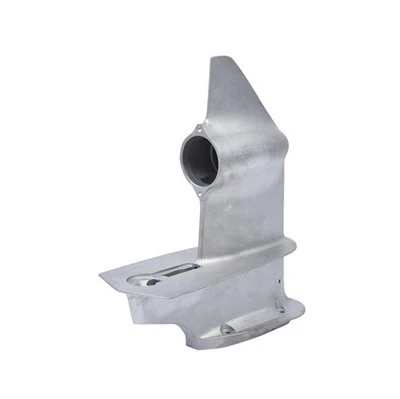
Aluminum Die Casting Parts for Marine Equipment
Applied to marine lighting housings, ship electrical control boxes, maritime sensor enclosures, small marine pump valve

Magnesium Alloy Die Casting Parts for Power Tools
Tailored for motor housings, gearbox enclosures, handle brackets and heat dissipation end caps of handheld power tools

Aluminum Die Casting Parts for Telecommunication Base Stations
Applied to 5G base station antenna brackets, signal filter housings, communication power enclosures, base station heat

Aluminum Die Casting Parts for Construction Machinery
Tailored for electrical control enclosures, hydraulic auxiliary brackets, lighting equipment housings, sensor